

Member Spotlight: Seneca Non-Public Schools
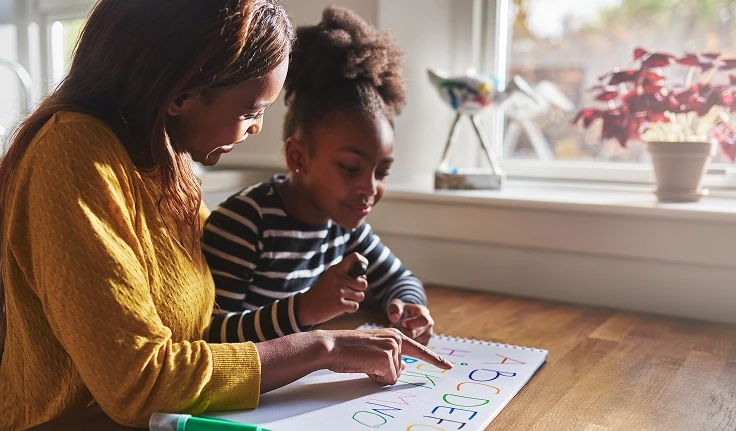
Seneca Non-Public School program delivers high-quality education with a culturally responsive lens and highly integrated therapeutic and special education services to students who have significant mental health and behavioral health needs throughout the San Francisco Bay Area. Seneca’s goal is to create school environments filled with the joy of learning by drawing out students’ strengths and teaching them strategies to cope with challenges, empowering them to succeed in school and beyond.
We interviewed the Seneca Non-Public Schools team to learn more about what they do and how they support literacy.
Oakland Literacy Coalition (OLC): How does your organization support literacy in Oakland?
Seneca Non-Public Schools: One of the ways Seneca supports literacy in Oakland is by recognizing that students need different things in order to be successful readers.
At Maya Angelou Academy, we provide small, supportive classrooms where students can get individualized academic instruction along with the therapeutic and special education support they need. We focus on building students’ foundational reading skills, comprehension, and confidence, while also building on their strengths and interests.
Through our NPS programs and Bridges services, we are also able to provide more targeted, intensive literacy support when students need it. Ultimately, our goal is to help students experience success as readers and develop the skills and confidence they need to be successful both in school and beyond.
OLC: What sets you apart from other organizations in your community? Or from other organizations with similar missions?
Seneca Non-Public Schools: For more than 40 years, Seneca has been committed to supporting children and families, no matter how significant the challenges they’re facing. We really believe that children and families don’t fail, but rather are failed by systems unable to meet their complex needs. So, our approach is to meet people where they are and do whatever it takes to help them be successful.
Today, Seneca serves young people and their families through mental health, education, foster care, and juvenile justice services. We provide support in schools, communities, and residential settings, and we try to look at the whole child and family rather than focusing on just one challenge.
A big part of that is our philosophy of Unconditional Care—being there for young people and families through the difficult moments, building on their strengths, and helping them see what’s possible for their future. We also make a point of providing care that is healing-centered and culturally responsive, because we know that every child and family has their own experiences, strengths, and goals.
OLC: What’s on the horizon? What community programming or events are coming up that your organization is most excited about and why?
Seneca Non-Public Schools: We are really excited to now have a reading intervention teacher at each of our non-public schools. These specialists have been trained in targeted reading intervention approaches and are committed to helping our striving readers build the skills, confidence, and strategies they need to become successful readers. Most importantly, we want every student to recognize that they can learn to read, experience success, and thrive in school.
OLC: Is there anything that you wish more people knew about your organization or the issues you are trying to solve?
Seneca Non-Public Schools: My wish is always for people to understand that students who struggle with reading just need the right kind of instruction. These students are intelligent and capable, but years of the wrong kind of reading instruction has led many of them to conclude that they aren’t as smart or capable as their peers.
I want people to know that it’s never too late to learn to read, including in adolescence and adulthood!
OLC: What are you most looking forward to as a member of the Oakland Literacy Coalition?
Seneca Non-Public Schools: I am so excited to be connecting with other educators and reading advocates in Oakland. There are so many great people doing amazing work across the city and I’m inspired by the many different approaches to helping Oakland students become thriving readers.
I can’t wait to see the brilliance that results from so many incredible brains and hearts working together!
OLC: Could you share an anecdote/experience about working with students or teachers that really stood out for you?
Seneca Non-Public Schools: After months of hounding a 7th grade student every morning to do some 1-1 reading work with me, and only succeeding in my quest about 50% of the time, the student showed up one morning and insisted on checking in with me right away.
He couldn’t wait to tell me that, for the first time, he had been able to read and understand everything that his teammates and opponents were typing in the chat connected to his online gaming platform. He agreed to start reading his first chapter book with me and even allowed his teacher to record him reading. I think I might have been even more excited than he was!
OLC: The literacy crisis is real and impacts us all at the local, state and national level. With that said, what does Literacy & Justice for All mean to you?
Seneca Non-Public Schools: Literacy is a civil right. Reading is not really about getting good grades, learning academic content, or even an enjoyable hobby. It can be all of those things, but truly, literacy is about survival.
It’s about being able to take care of and protect yourself and those you love from oppression, manipulation, misinformation, and exploitation.
It’s about being able to understand the world around you, recognize when someone is trying to take advantage of you, advocate for yourself, understand your rights, access opportunities, and make informed decisions about your life.
Literacy gives people access to information, independence, and a voice. When we teach a child to read, we aren’t simply teaching an academic skill—we’re giving them greater access to the world and opportunities for their future