

Member Spotlight: Storyland Collective
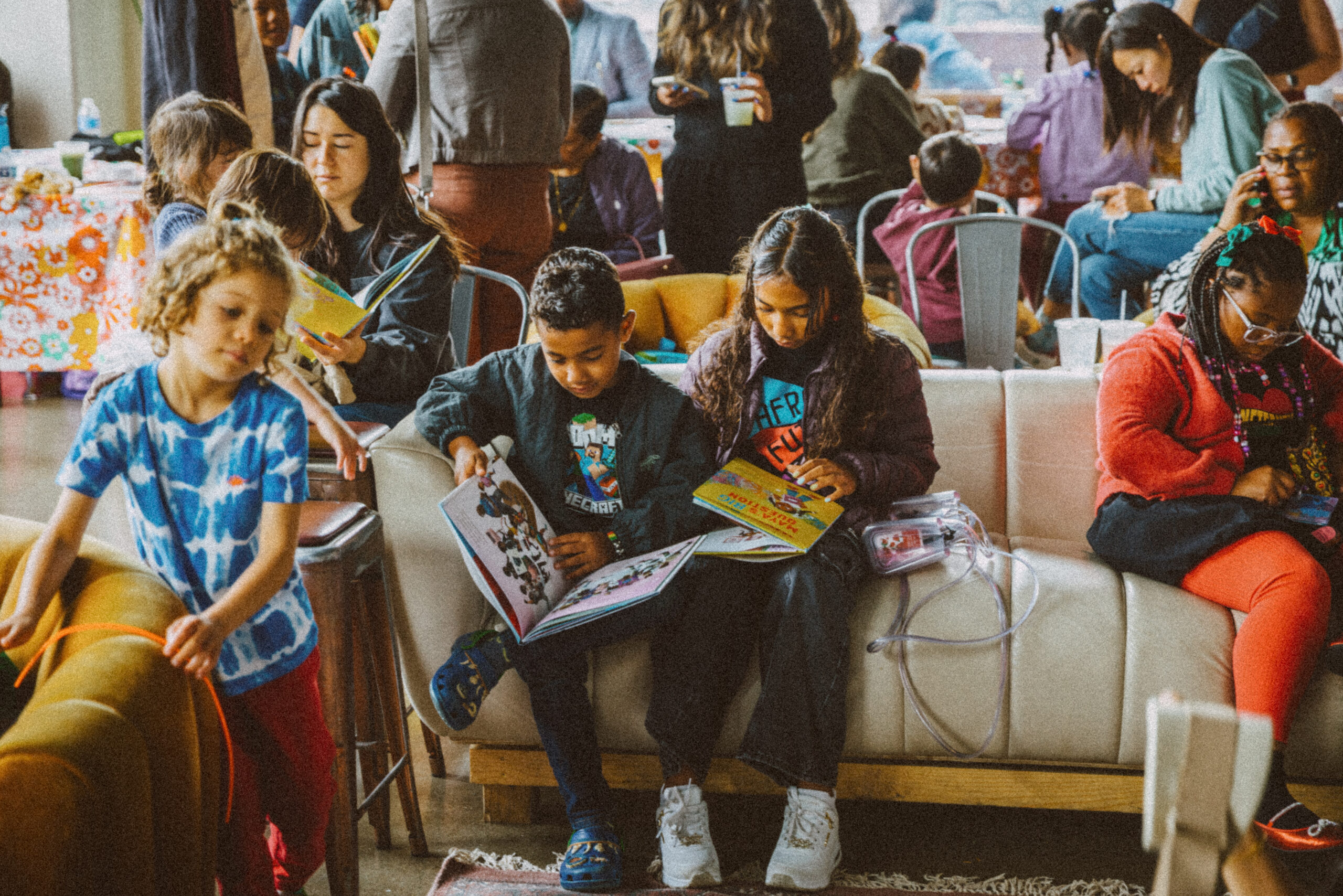
Storyland Collective is an Oakland-based literary arts organization working toward a Bay Area where literacy belongs to every family. They produce free, joyful, culturally rooted literary arts experiences in the neighborhood spaces families already know and trust: bookstores, coffee shops, parks, and festivals.
“Family engagement is one of the strongest predictors of literacy success, yet many Oakland families face barriers to traditional programs, including language differences, transportation, inflexible schedules, and a shortage of culturally relevant options,” Storyland Collective told us. “So we don’t wait for families to find programming. We bring it to them by popping up in their favorite neighborhood spots.”
We interviewed the Storyland Collective team to learn more about what they do and how they support literacy.
Oakland Literacy Coalition (OLC): How does your organization support literacy in Oakland?
Storyland Collective: Storyland Collective creates joyful, intergenerational arts and literacy experiences throughout Oakland. We host interactive storytimes and creative workshops, produce community literacy events with local authors, artists, bookstores, and cultural organizations, and give away books so families can build home libraries.
We meet families where they already are. This summer that meant Prescott Market in West Oakland, a pillow-covered floor at Marcus Books, and a storytime after a lap around Lake Merritt. If we have ten feet, we’re rolling out our storytime rug.
We center Black, Indigenous, Pacific Islander, Latinx, Asian American, immigrant, mixed-status, LGBTQIA+, disabled, system-impacted, and housing-insecure families, and we treat caregivers as partners in literacy. Since launching, more than 500 children and caregivers have joined 17 Storyland events, more than 10 Oakland Public Library cards were issued on site, and we have partnered with over 10 community organizations.
OLC: What sets you apart from other organizations in your community? Or from other organizations with similar missions?
Storyland Collective: We build for the whole family. Our sessions are designed so grown-ups read, color, write, and make alongside their kids, because the reading habits that last are the ones a family builds together.
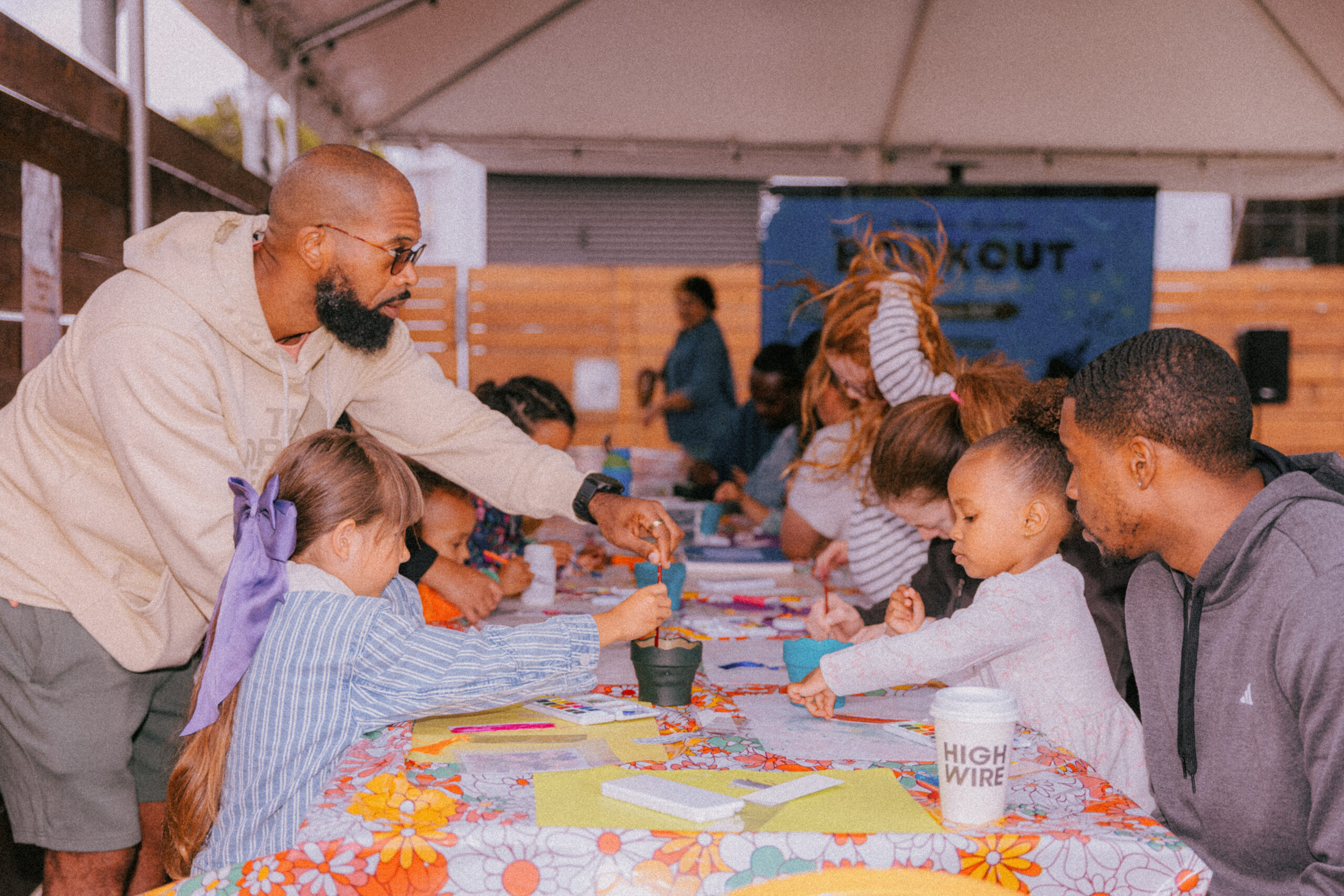
We are a literacy organization that behaves like an arts collective. Every session pairs a book with a maker activity and a local artist or author. Kids have tie-dyed with plants foraged in the Bay and learned braiding techniques after authors share picture books celebrating wash day.
We also bring our programming to spaces that aren’t often associated with read-alouds. Cafes, markets, soccer fields, WNBA games, barbershops, festivals, and front steps are all fair game. We don’t wait for families to find programming. We bring it to the community spaces they already love.
Our goal is to complete existing organizations by making reading feel like a celebration and by building the conditions that make literacy sustainable: curiosity, confidence, cultural connection, and family engagement.
OLC: What’s on the horizon? What community programming or events are coming up that your organization is most excited about and why?
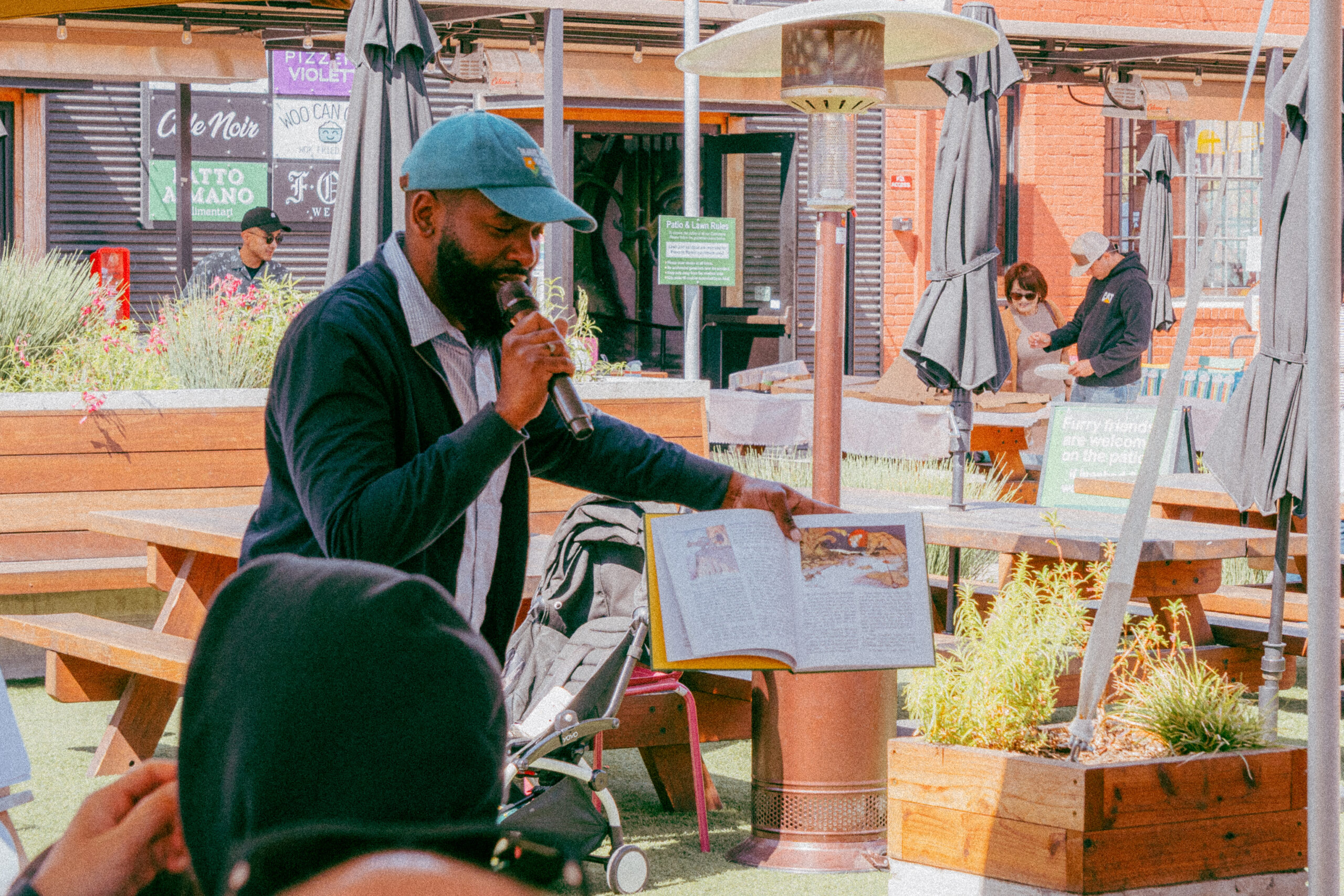
Storyland Collective: The Bookout Block Party, Saturday, September 12, at Marcus Books. Our end-of-summer celebration takes over the entire block outside the nation’s oldest independent Black-owned bookstore: local authors reading aloud, games all afternoon, art-making, vendors, and music. It closes a summer of weekly sessions and is our biggest event yet! Eventbrite:
www.eventbrite.com/e/the-bookout-block-party-celebration-storytime-crafts-games-and-more-tickets-1992719984115
A regular fall engagement at Prescott Market. Our summer series in West Oakland included two outdoor storytimes, a fable-writing workshop, and a bookmark-making workshop. Families kept coming back, so we’re making it ongoing. We’ll meet families by Prescott’s sandbox starting in October.
2027. We’re building toward two festivals, twenty free pop-up reading experiences, and school visits across Oakland, with a goal of engaging 1,500 children, caregivers, and community members.
OLC: Is there anything that you wish more people knew about your organization or the issues you are trying to solve?
Storyland Collective: Literacy does not begin and end with whether a child can decode words on a page. Children also need to see themselves in stories, feel confident asking questions, experimenting with language and making mistakes. Anyone, at any age, should be able to experience reading as something connected to themselves, their imagination, their family, and a sense of belonging.
Many Oakland families care deeply about literacy but face barriers to traditional programming: work schedules, transportation, cost, unfamiliar institutions, or simply not knowing what is available. That is why Storyland brings free books and literacy experiences into the places families already visit and trust.
We also want people to know that caregivers are among its greatest resources for literacy. When caregivers feel welcomed, not evaluated, they share stories, model curiosity, and help children build relationships with books that continue long after an event ends..
OLC: What are you most looking forward to as a member of the Oakland Literacy Coalition?
Storyland Collective: We’re a young organization, and we learn fastest from other practitioners: what’s working in classrooms, what libraries are seeing, where the gaps are that nobody is covering yet.
We’re also looking forward to giving back to the Coalition’s network. Our Summer Action Book Grant let us add 40 new books to a book fair at the Boys & Girls Club of Oakland. We’d love to build the kind of referral relationships that mean a family who finds us on a Saturday morning knows exactly where to go on a Tuesday afternoon.
OLC: Could you share an anecdote/experience about working with students or teachers that really stood out for you?
Storyland Collective: At a Storyland session this past March, a girl walked up and asked: “Are we making the noodle necklaces again?” She had made one at our Juneteenth celebration at Kinfolx. Nine months later, she could recall details from that celebration.
The partners we work with and our storytime programming may feel a bit unconventional, but those new associations and memories are what we are excited to cultivate. Children remember what their hands were doing while someone read to them, and they come back looking for that feeling.
This summer gave us the other half of that lesson. At our fable writing workshop at Prescott Market in West Oakland, kids heard fables read aloud and then wrote their own. Writing took whatever form it needed to. Then we asked if anyone wanted to read their fable to the group, and they volunteered. Some read alongside their parents, others narrated over the pictures they drew. We experienced different forms of storytelling and lots of bravery all in one moment.
Literacy doesn’t always arrive looking like a book in a lap. Sometimes it looks like a noodle necklace, or a kid narrating over her own drawings. Those are the moments families carry home.
OLC: The literacy crisis is real and impacts us all at the local, state and national level. With that said, what does Literacy & Justice for All mean to you?
Storyland Collective: Literacy and justice are inseparable. Literacy shapes who can understand and think critically about the systems affecting their lives, advocate for themselves and their communities, preserve cultural memory, and imagine possibilities beyond the conditions they inherited.
“Literacy & Justice for All” means every Oakland resident deserves access not only to the mechanics of reading and writing, but also to books that reflect their family, language, culture, body, and imagination. It means families should not have to cross town, pay a fee, or enter an unfamiliar institution to experience excellent literacy programming.
It also means recognizing children, caregivers, and families as knowledge holders. We are not bringing literacy into communities where it is absent. Oakland families already tell stories, translate across languages, carry histories, navigate sophisticated systems to thrive, and create and maintain beautiful cultures. Our responsibility is to honor those practices, expand access to books and creative resources, foster psychologically safe spaces where people feel truly welcome, and, through those spaces, encourage families to recognize themselves as readers, writers, artists, and authors of what comes next.