


Diving Into Literacy: A Visit to Harbor House’s “Legends of the Deep” Summer Camp
By Lola Dvorak, School Library Partnerships Coordinator
Last week, I had the privilege of visiting Harbor House, a Christian community development organization rooted in Oakland’s San Antonio district. Harbor House is a returning recipient of the Oakland Literacy Coalition’s Action Grant, and this year received a $500 Summer Action Grant along with 100 books to support their summer camp program.
Harbor House describes its mission simply: to provide a safe place where opportunities, resources, and relationships can be shared so that children, teens, and families may flourish. That mission is carried out through four pillars of care — education, leadership development, spiritual formation, and food and clothing distribution — woven together to support the whole family, not just the child in front of them.
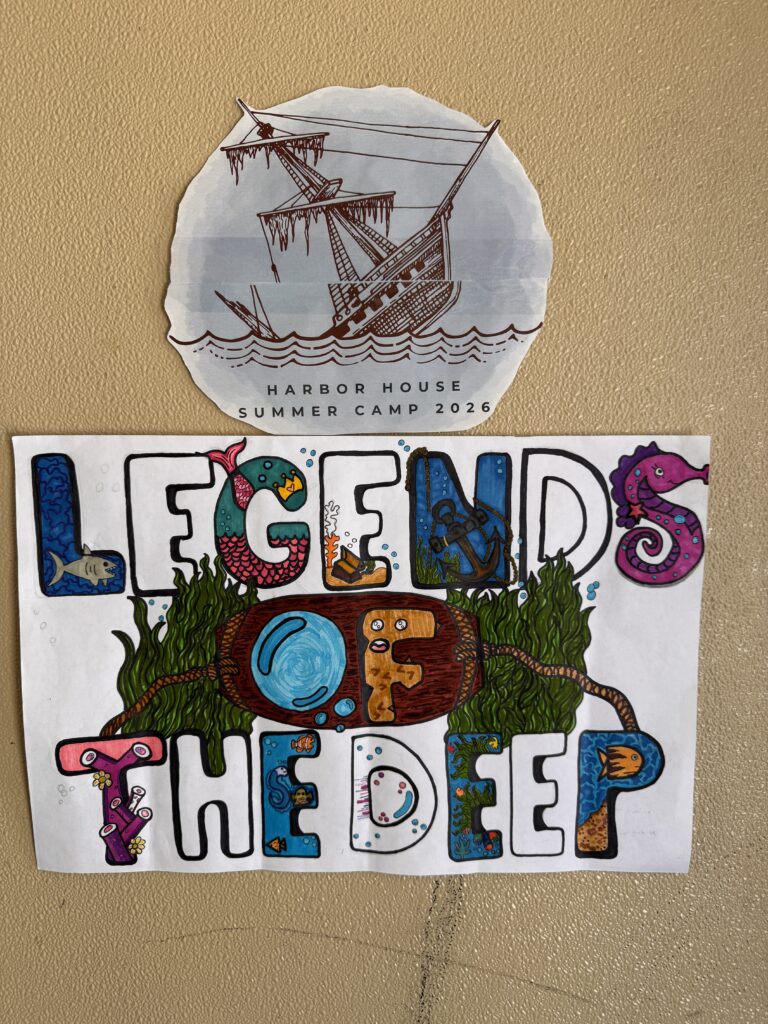
Because Harbor House’s own building is currently under construction, this year’s camp found a temporary home at the Community School for Creative Education. The change in location didn’t dim the energy inside. The 2026 theme, “Legends of the Deep,” is a four-week ocean adventure designed to spark imagination, curiosity, and joy in learning, with students diving into a new deep-sea habitat each week through stories, art, and hands-on exploration. At the center of it all is a book club that meets three days a week, where students connect with stories and bring them to life through discussion, storytelling, and group activities.
I was given a tour by Dami Ojundipe, Harbor House’s Director of Programs, who has led the organization’s education programming for over two years. Dami’s background as a credentialed teacher and PMP-certified program manager shows in the way the camp runs — every group intentionally structured, every session building toward a clear goal, but never at the expense of warmth.
That intentionality was clear in the book club groups themselves. Students are grouped by reading level, which Dami explained supports collaboration, confidence, and meaningful participation. Within each group, kids move through shared reading, read-alouds, and partner reading, giving every student — regardless of where they’re starting from — a way into the text alongside their peers.
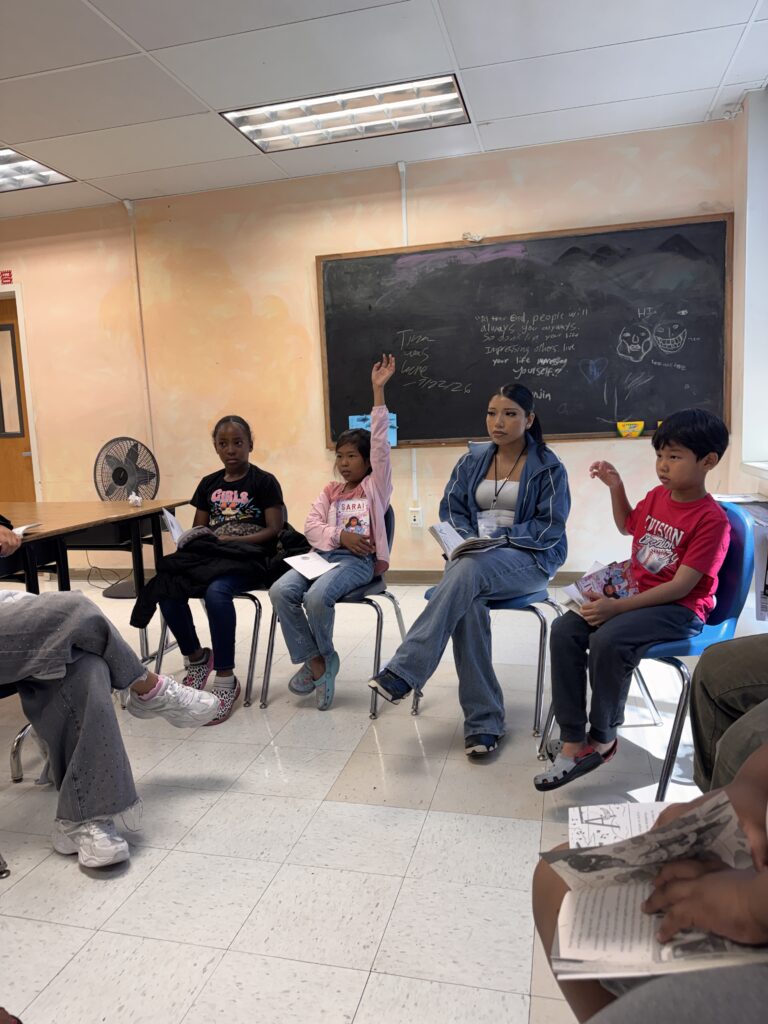
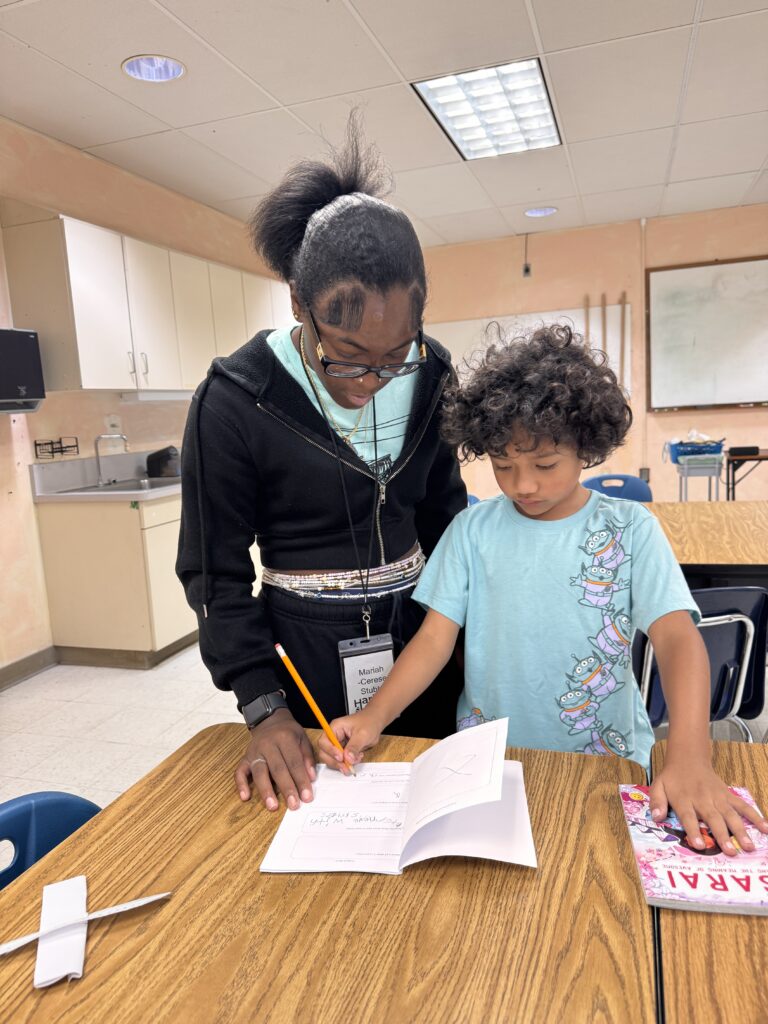
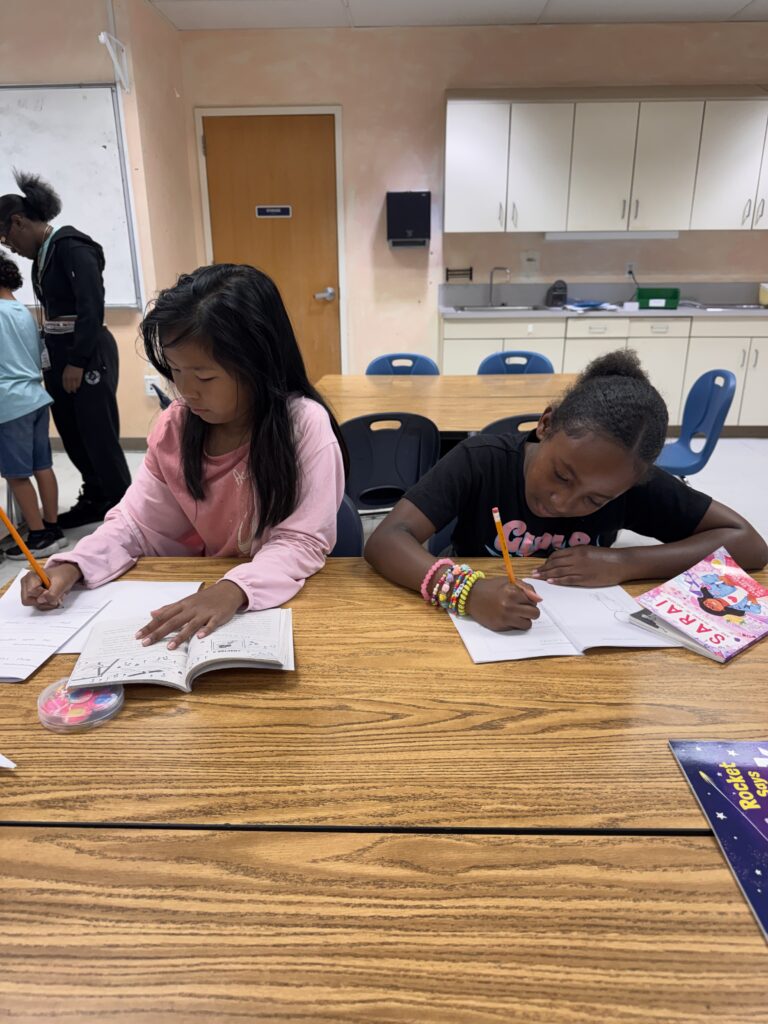
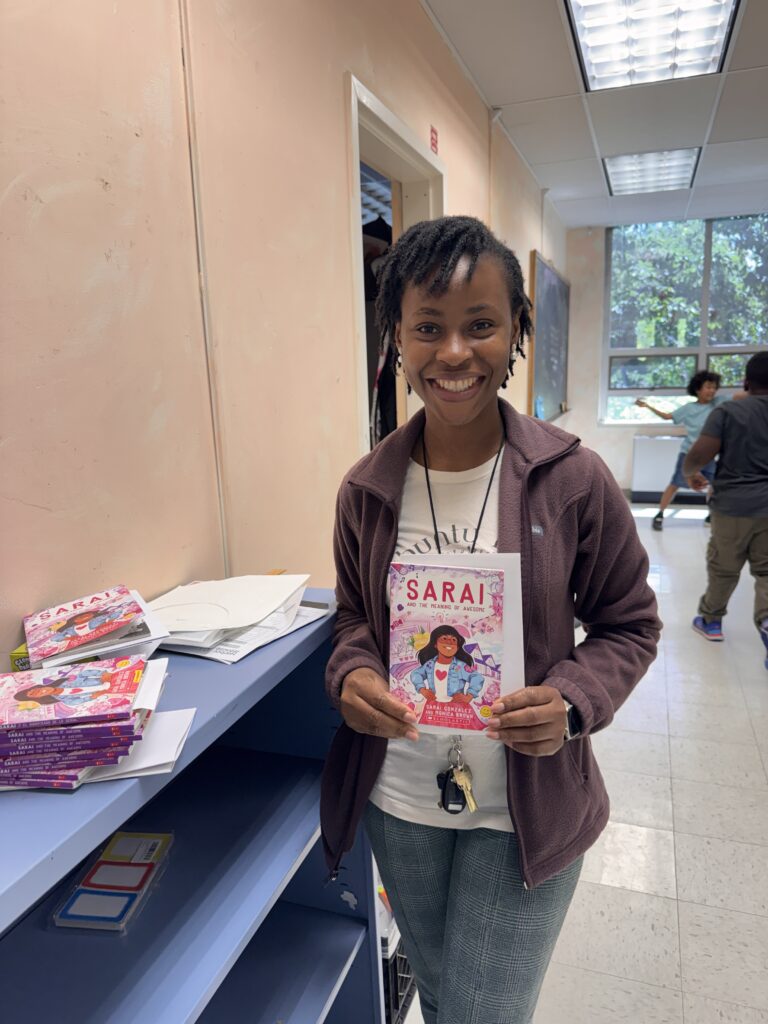
I sat in on the third-grade book club, led by Dami and supported by a pair of high school interns, one of whom worked one-on-one with a Spanish-speaking student to make sure she could follow along and take part. The group was reading Sarai and the Meaning of Awesome by Sarai Gonzalez, taking turns reading aloud a chapter at a time. Afterward, they talked through unfamiliar words, checked in on what they’d understood, and shared their reactions to what had happened. One student, reflecting on the chapter, said the book was teaching them how to “fight with their words.” Then the group picked up their journals and wrote about what they’d read.
It was a small moment, but it captured something Harbor House clearly does well: giving kids language — literally — for working through conflict, difference, and connection, and then giving them space to sit with it on the page.
That work doesn’t stop when camp ends. Students take their books home to continue reading with family, and they’re encouraged to bring pieces of camp home with them too — new vocabulary, favorite moments, the stories they’re still turning over in their heads. The goal, as Harbor House sees it, is to build confidence and consistency in reading that outlasts the summer: preventing the learning loss that so often creeps in over break, while helping kids see reading as something enjoyable and worth returning to, not just an assignment.
Watching the third graders work through their book together — sounding out hard words, defending their interpretations, writing down what stuck with them — it was easy to see Harbor House’s strengths. They’ve built something that treats literacy as a relationship, not a checklist: between student and book, between peers, and between camp and home. It’s exactly the kind of grounded, community-rooted work the Reading Everywhere Action Grant exists to support.