


What Oakland Teens Want Us to Know About AI and Reading
Last summer, Oakland High student Drew Bloch was taking an online algebra course, and found the video modules not very helpful. He used ChatGPT as a tutor:
“I didn’t just paste in the equation. I asked it, ‘Hey, explain this,’ Drew said. “It was a really, really valuable resource, because I ended up passing the course, and then I had to take an OUSD test and I was one of the few students who passed. I make sure when I use AI, I use my brain first,” he said, “and then I use it to help make my brain work.”
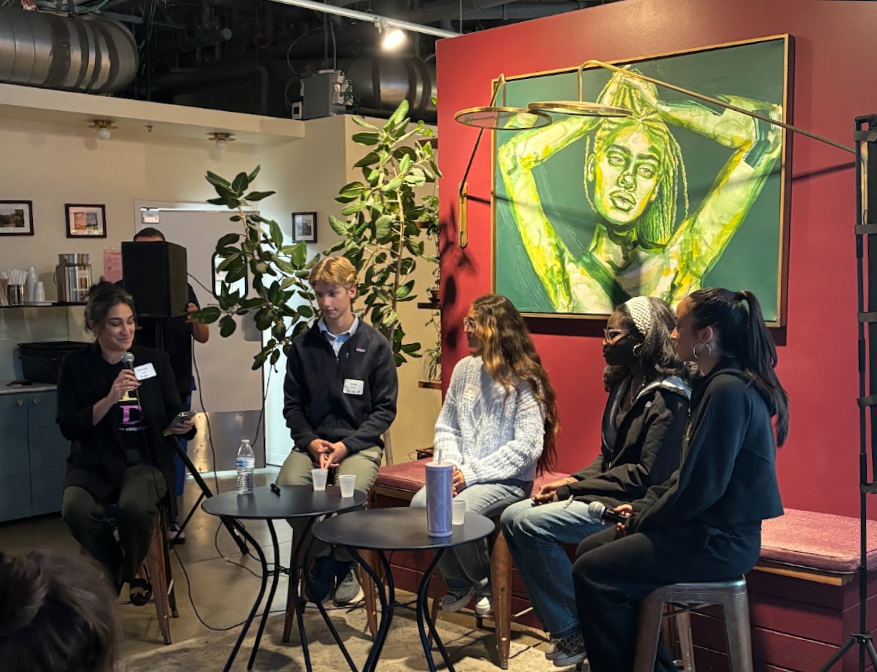
Drew was one of four students who joined our October 21 event, “Teens, AI, and the Power of Reading,” sponsored by Common Sense Media. The conversation explored how AI is changing the way young people learn, and what educators and families can do to ensure technology doesn’t come at the expense of reading, critical thinking, curiosity, and human connection.
We know AI can affect young people’s learning and development. We also know that young people, like many adults, are already using these tools. What we heard from young people is they want adults to help them navigate it, and to center students’ voices n the decisions that affect them.
Other student panelists, from Oakland Tech, Melrose Leadership Academy, and Bishop O’Dowd, shared how AI and social media have led them to read less, despite being avid readers when they were younger. Sophia, and eighth grader who loves to read, said AI has made her read less. “I’m just so used to having information given to me that I just don’t really feel the need to read anymore,” she said. “And that kind of makes me angry, because I love reading so much.”
Amina Tongun, a senior at Oakland Tech and a student director on the OUSD School Board, expressed anxiety about our future with AI, given how she’s seen people use AI as a source without fact-checking and spread misinformation.
Others were eager to learn how to use these tools well and to have a say in the choices being made about them.
Research from Common Sense Media reinforced the importance of these conversations. Teens use AI in more thoughtful ways than many adults might assume, and most try to solve problems on their own first. Yet nearly three in four say they’re missing important conversations with adults about AI, and many don’t know their school’s rules.
Read Common Sense Media’s report: Teens in the AI Era: Schoolwork and Skills That Matter
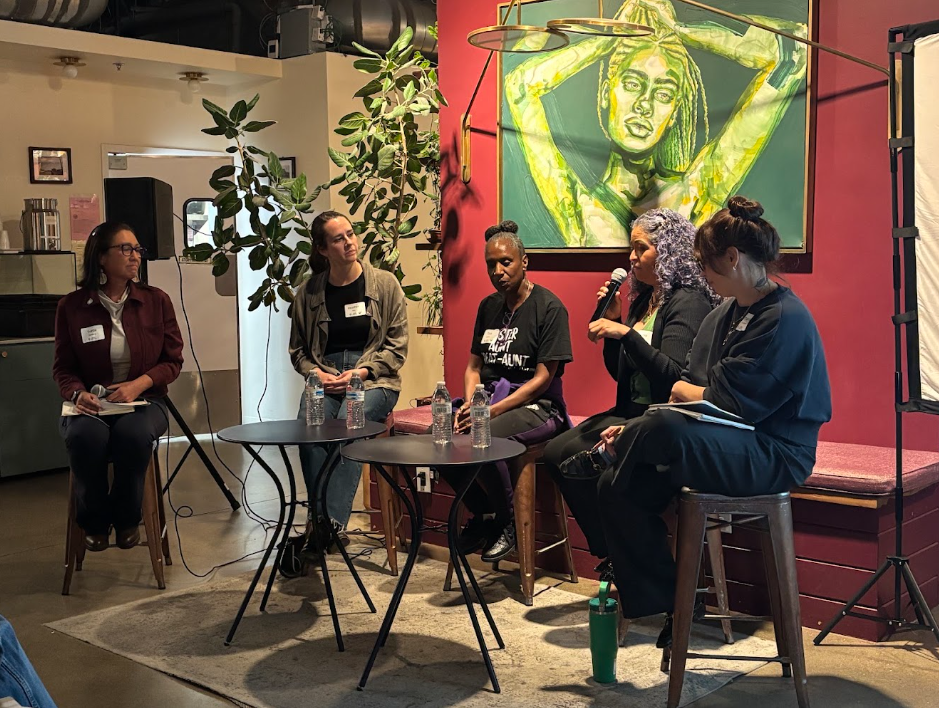
After hearing from the students, a panel of educators weighed in about how they see AI changing teaching and learning, and the need to protect thinking, reading, and human connection. Heather Tills, who works with English learners, described students who want the “right answer” quickly, rather than taking time to explore: “Genuinely doing research requires academic curiosity and an ability to ask questions without the answer in mind,” she said.
Her response is to bring community back into learning. Educators shared approaches that make more room for human connection and deeper thinking, including office hours, pen-and-paper finals, student-written AI policies, and a new pen pal program.
A big takeaway was that as AI changes how young people learn and find information, students need adults who will listen, ask questions, and invite them in early in the process, not after decisions are already made.
Thank you to everyone who joined us, especially our student panelists for sharing their experiences and leading the conversation. We’re grateful to Common Sense Media for sponsoring the event.
More resources on navigating AI in schools are available at https://www.commonsense.org/education/ai-in-schools.